Program Day One – Tues 7th July
Time: 08:00 AM – 08:30 AM
Title: Symposium Registration
Details: Registration Desk is in the Pilgrim Office at the rear of Church
Time: 09:00 AM – 09:30 AM
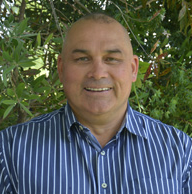
Welcome to Country
Presenter: John Lochowiak
The Welcome to Country will be delivered by John Lochowiak, a local Wadi – initiated Man – who has strong ties to many language groups throughout Australia including but not limited to Pitjantjatjara, Kaurna, Ramindjeri, Narungga Yankuntjatjara and Arrernte. His strong cultural grounding is complemented by his deep Catholic faith.
Time: 09:30 AM – 10:00 AM
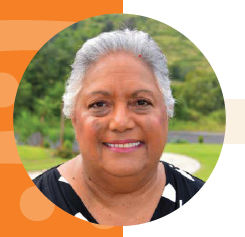
Aboriginal Matriarchs: Holders of Knowledge and Keepers of Stories
Presenter: Professor Dr Anne Pattel-Gray
Over the generations, we have had the privilege of learning from our tribal matriarchs-our great grandmothers, grandmothers, and mothers, elders, and senior law women. These Aboriginal Matriarchs taught us our culture, stories, laws, songs, dances, and kinship systems, and instilled in each and every one of us our cultural values and morals, which are the core of our integrity. We shall hear of her story and what she endured.
Time: 10:40 AM – 11:10 AM
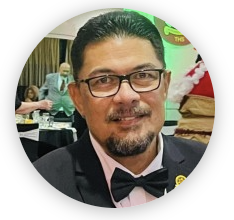
Moana Keepers, Story Carriers: Indigenous Pacific Ways of Holding Knowledge
Presenter: Rev Prof Dr Nasili Vaka’uta
Moana Keepers, Story Carriers: Indigenous Pacific Ways of Holding Knowledge and Life: Reflection on Indigenous Pacific/Oceanic understandings of knowledge as relational, embodied, ancestral, and spiritually grounded. Within Pacific worlds, knowledge is not treated as an abstract possession or individual achievement, but as a sacred trust held in genealogy, land, sea, language, ritual, memory, and community. Stories are among the primary means by which this knowledge is carried. They transmit identity, preserve ancestral wisdom, shape moral imagination, and sustain right relationships between people, creation, and the divine. In this sense, stories are not merely cultural artefacts but living theological texts through which communities discern meaning, responsibility, and hope. From an Indigenous Pacific theological perspective, to be keepers of knowledge and holders of stories is to participate in the ongoing work of remembering, interpreting, and renewing life.
Time: 11:15 AM – 11:45 AM
On God’s Name: Historical Analysis on How Taiwan Indigenous People Naming God
Presenter: Dr Chang-Hua Lin
How tribal people naming God is a significant theological issue. During 400 years of Taiwan church history showed two paradigms of naming God. The first one is used western term to denote God, for example Deus or Alid, the second paradigm is used tribal highest deity’s name to denote Christian God, both endeavours imply crucial theological implications. My keynote will focus on these historical phenomena to analysis these two paradigms’ advantage or challenge and its hint on tribal theology.

Time: 11:45 AM – 12:20 PM
Küthsükime – An Indigenous Methodological Starting Point
Presenter: Rev. Prof. Dr. Hukato N. Shohe
One characteristic of the Sumi life is the notion of relationship between God, creation & humanity on one hand and the idea that our understanding of things is based on the relationship we share with the world around us. This presentation explores the idea of Kuthsukime, a Sumi dialect, similar to the English concept of Relationality. Firstly, Relationality as a philosophical & theological term carries the abstract idea of the relationality of the universe with the concept being the starting point. Whilst the notion of Kuthsukime always is grounded on the concrete living context out of which our understanding of the world emerges. Secondly, Kuthsukime is a compound word Küthsü (related) and Kime (joined). A relationship that implies joinedness & relatedness. Hence, we are not only related by our beliefs and history but are somehow joined to the world’s fate. This work intentionally explores the Sumi understanding & idea as a theological tool for understanding, expounding & engaging.
Time: 01:30 PM – 04:30 PM
Title: Group Discussions
Program Day Two – Wed 8th July
Time: 08:30 AM – 08:45 AM
Title: Day 1 Summary
Presenter: Professor Dr Anne Pattel-Gray
Prof. Dr Anne Pattel-Gray will provide a summary of the keynote presentations from the first day of the symposium along with her insights.
Time: 08:50 AM – 09:20 AM
Theological Conversation on Country
Presenter: Rev Canon Dr Garry Deverell
There are few more life-affirming practises than theological conversation, which this brief presentation will define as a careful listening, speaking and responsibility towards communion in God on Aboriginal country. Carefulness means that the partners to the conversation, Indigenous people and settlers, whilst deeply respectful of each other’s particularity and alterity nevertheless strive towards finding common ground. Listening requires that we still our internal scripts and filters to make room for those who suffer the most, for the cry of the earth and of Indigenous people, who, in Australia are analogous to the suffering Christ. Speaking means speaking the truth in love. For Aboriginal people, this calls us to find courage to speak our truth even when it is dangerous to do so. Settlers, for their part, are called to consider whether their words are always already embedded in supremacist narratives which place themselves and their power at the centre.


Time: 10:05 AM – 10:40 AM
Because Country is Method: Reframing Christology, Axiology and Hermeneutics
Presenter: Naomi Wolfe
This paper outlines a decolonising framework for theological education that recentres Indigenous Knowledges, reconfiguring the grounds of theological method. Aboriginal and Torres Strait Islander epistemologies are not extra to Christian theology but constitute rigorous, generative knowledge systems that both complement and critically interrogate & deconstruct dominant Eurocentric paradigms. Moving beyond deficit-based constructions, Country is foreground as a primary locus of theological meaning articulated as Christological, axiological, and hermeneutical. As Christology, Country discloses a relational and embodied understanding of divine presence, disrupting abstracted and dislocated accounts of Christ which EuroChristianity claims as orthodoxy. As axiology, it reorders value through kinship, reciprocity and responsibility, challenging extractive forms and individualised ethical frameworks. As hermeneutic, Country offers interpretive practices grounded in story, place & continuity.
Time: 10:40 AM – 11:20 AM
Creation Stories in Dialogue: Engaging Biblical and Local Ancestral Narratives
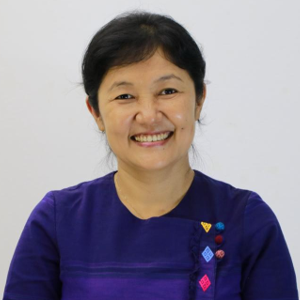
Presenter: Assoc Prof Fanang Lum Lahpai
This paper brings biblical and Indigenous creation narratives into conversation as they are lived and understood among Myanmar’s ethnic Christians. Focusing on the Kachin people, it engages creation narratives from Genesis, Wisdom, Psalms and Isaiah alongside ancestral accounts, recognising that interpretation is never neutral. By reappropriating and reinterpreting these accounts, this study invites ethnic Christians to reconsider how foundational narratives shape understandings of gender, suffering and justice in their communities. Comparative and close reading methods are employed to highlight both common ground and difference, aiming to foster dialogue attentive to context and complexity. Delegates theological understanding will be broadened and encouraged to see a more liberative and inclusive vision of Christian identity, one that is responsive to the realities of suffering, the call for gender equality, and the wisdom embedded in both biblical and ancestral traditions.
Time: 12:30 PM – 04:10 PM
Title: Group Discussions
Time: 04:00 PM – 04:30 PM
Title: Symposium Conclusion and Closing Ceremony
Presenter: Professor Dr Anne Pattel-Gray, MC: Des Rogers, John Lochowiak